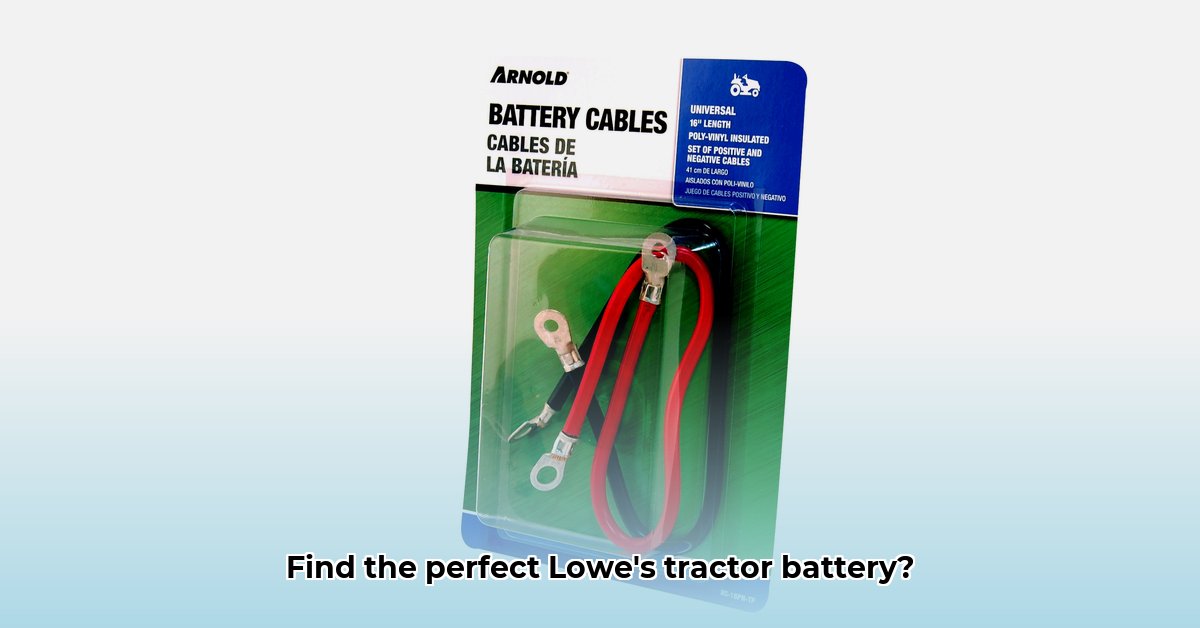
Picking the right battery for your tractor can seem daunting, but this guide simplifies the process, helping you find the perfect fit at Lowe's. We'll cover everything from understanding your tractor's needs to comparing different options and troubleshooting common problems. For more information on Group 31 batteries, check out this helpful resource: Group 31 Battery Info.
Understanding Your Tractor's Battery Needs
Before heading to Lowe's, consult your tractor's owner's manual. This essential document contains crucial information:
- Voltage: Most tractors use 12 volts, but always verify this.
- Cold Cranking Amps (CCA): This measures the battery's power output in cold temperatures. Higher CCA is better for cold climates, ensuring reliable starts.
- Group Size: This specifies the battery's physical dimensions (height, width, length), ensuring a proper fit in your tractor's battery tray. A common example is Group 24 or Group 31.
Missing your manual? Don't worry! The battery itself might have this info printed on it; otherwise, an online search with your tractor's model number should provide the necessary details. Accurate identification is paramount to a successful purchase.
Decoding the Numbers: CCA, Voltage, and Group Size Explained
Let's clarify these key specifications:
Voltage (typically 12V): This represents the electrical potential your battery provides. Incorrect voltage can damage your tractor's electrical system.
Cold Cranking Amps (CCA): This crucial rating indicates the battery's ability to deliver current at low temperatures, directly impacting your tractor's ability to start in cold weather. Higher CCA values are generally preferred, especially in colder climates.
Group Size (e.g., Group 24, Group 31): This standard classification defines the battery's physical dimensions. Selecting the correct group size ensures a secure and proper fit within your tractor's battery compartment. Using an incompatible group size could prevent the battery from fitting correctly.
Comparing Lowe's Tractor Batteries: A Head-to-Head Analysis
Choosing the right battery at Lowe's often involves a comparison of features, reviews, and price. We’ve created a sample comparison table (note: specific models and prices are subject to change; always check Lowe's website or your local store for the latest information).
| Battery Model (Example) | Voltage | CCA | Group Size | Approximate Price | Warranty Length | Average Customer Rating |
|---|---|---|---|---|---|---|
| Lowe's Brand X | 12V | 550 | Group 24 | $65 | 1 year | 4 out of 5 stars |
| Lowe's Brand Y | 12V | 650 | Group 24 | $80 | 2 years | 4.5 out of 5 stars |
| Deka (at Lowe's) | 12V | 700 | Group 27 | $95 | 3 years | 4.8 out of 5 stars |
(Disclaimer: Prices and availability are subject to change. Consult Lowe's for current information.)
Rhetorical Question: Given the variation in price and warranty, how do you balance cost with long-term reliability when choosing a tractor battery?
Troubleshooting: Addressing Common Battery Issues
Even the best batteries can encounter problems. Here's how to address common issues:
Dead Battery: Inspect battery terminals for corrosion; clean them using a wire brush and a baking soda paste. A multimeter can test the battery’s voltage; a reading below 12V suggests the need for charging or replacement.
Jump Starting: For a completely dead battery, a jump start may be necessary. Connect jumper cables carefully (positive to positive, negative to negative), avoiding sparks. Start the tractor, then carefully remove the cables.
Battery Maintenance: Regularly check fluid levels (if applicable) and keep terminals clean. Proper charging after each use significantly extends lifespan.
Quantifiable Fact: A properly maintained tractor battery can last up to 3-5 years with consistent charging and environmental protection.
Battery Technology and Lifespan: Understanding the Factors
Most Lowe's tractor batteries are lead-acid. Several factors significantly impact their lifespan:
- Charging Habits: Overcharging or undercharging causes damage; use a compatible charger.
- Environmental Conditions: Extreme temperatures (heat and cold) stress batteries; store in a cool, dry place when not in use.
- Usage Patterns: Short, frequent uses might not fully recharge the battery; longer runs are better for battery health.
Safety First: Handling and Disposal
Always wear safety glasses and gloves when handling batteries to avoid acid spills.
Never short-circuit battery terminals; this can create a dangerous spark or fire.
Dispose of old batteries responsibly through Lowe's recycling programs (check local store availability).
This guide provides the information you need to select the optimal Lowe's tractor battery to maintain the dependability of your power equipment. Remember, a well-informed decision today results in reduced future headaches.